Crispy Smoked Wings on the Pellet Grill (Two-Phase Method)
Smoke low at 225°F for deep flavor, then crank to 400°F for crispy skin both problems solved in under 2 hours.
Disclosure: As an Amazon Associate, I earn from qualifying purchases. This means I may earn a small commission if you click a link and make a purchase, at no extra cost to you. I only recommend products I genuinely use and trust.
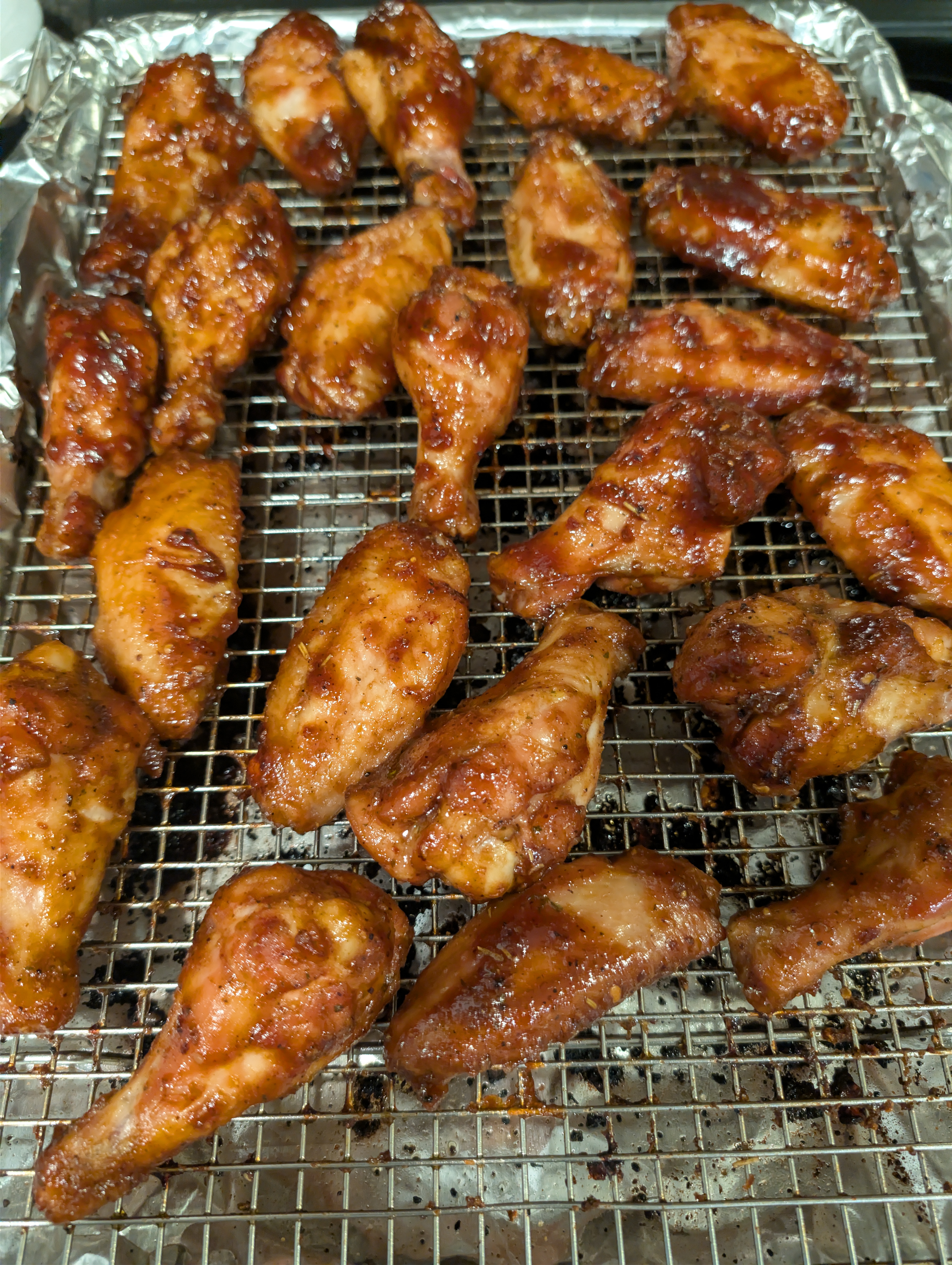
Why Smoked Wings Are Harder Than They Look
Most smoked wing recipes fail on one of two things: the smoke flavor is there but the skin is rubbery, or the skin is crispy but the smoke barely registered. That's because low heat (where smoke happens) and high heat (where skin crisps) work against each other if you're trying to do both at the same temperature.
The two-phase cook fixes this directly. You're not trying to compromise at 325°F and get mediocre results on both fronts you're committing fully to low heat first, then fully to high heat second. Under two hours total. Wings are thin enough to handle both phases without drying out.
The other piece that most recipes leave out: a seasoning blend that can stand up to both phases. Garlic salt gives you the base, Cajun seasoning brings the savory heat, and KB Korean BBQ adds that sweet-savory finish that works especially well with smoke.
The Rub
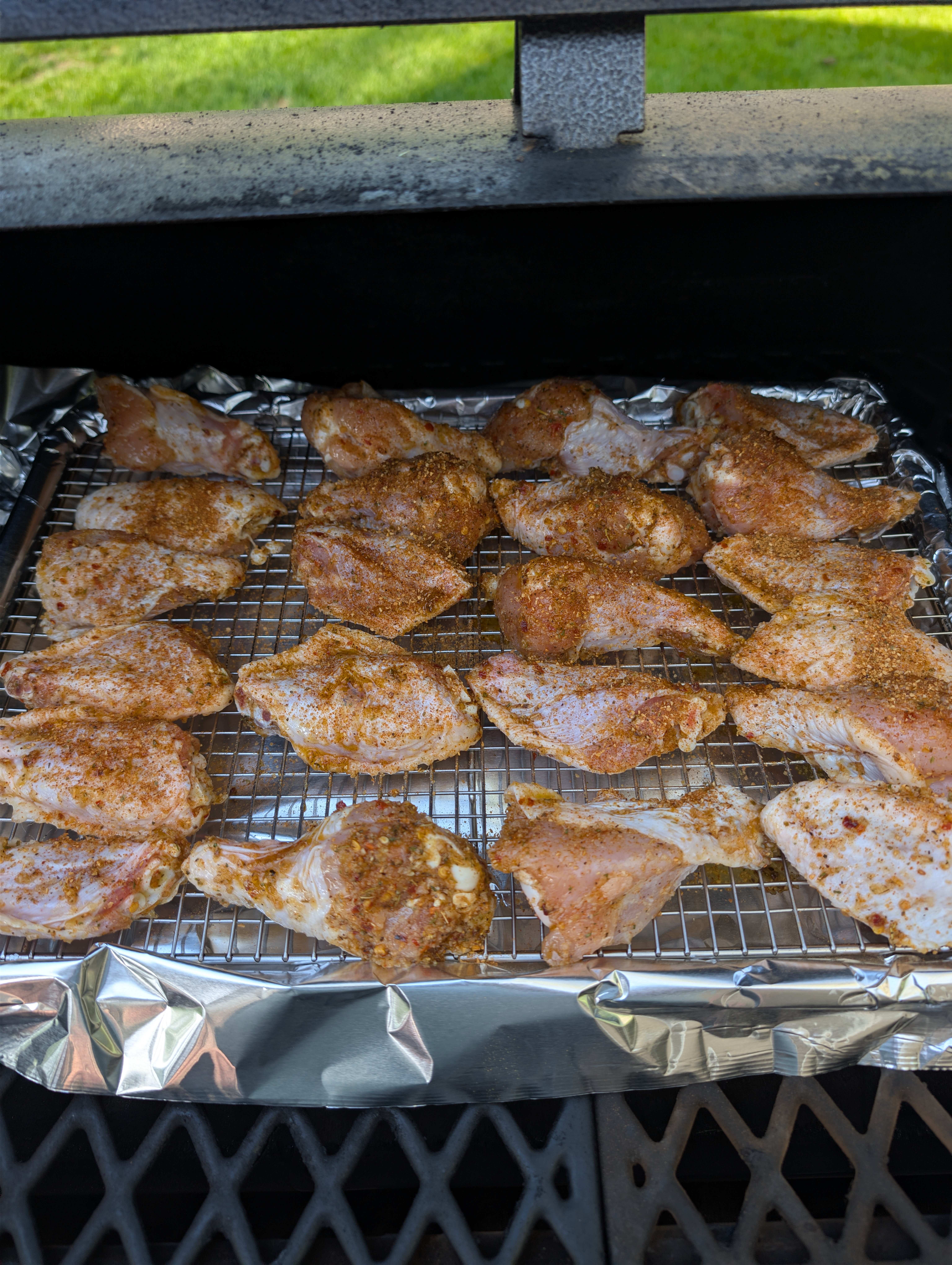
This is a straightforward seasoning setup built around Garlic Salt, Cajun seasoning, and KB Korean BBQ. All quantities below are for 3 lbs of wings (roughly 20–24 pieces).
- Lawry’s Garlic Salt
- Badia Louisiana Cajun Seasoning
- Spiceology Korean BBQ Seasoning Sweet & Savory Asian Rub
Season the wings evenly with Garlic Salt, Cajun Seasoning, and KB Korean BBQ. Go lighter than you think at first; you can always add more finish seasoning after the wings come off the grill.
Prep: The Rest Step You Can't Skip
After seasoning, spread wings on a wire rack over a sheet pan single layer, skin-side up and refrigerate uncovered for at least 1 hour. Overnight is significantly better.
The open-air rest in the fridge gives the surface moisture time to evaporate while the seasoning settles into the skin. By the time the wings hit the grill, the skin is noticeably drier to the touch than when you seasoned them. That's exactly what you want.
Pro tip: Make the effort to separate drumettes and flats if they aren't already. They cook at the same rate, but having them uniform makes it easier to check internal temps consistently and prevents overcrowding. Don't discard the wing tips. Smoke them alongside and snack on them while you wait.
Pellet Selection
Chicken is a lean, mild protein. It picks up smoke aggressively compared to pork or beef. You want a wood that complements rather than dominates.
Apple
Mild · Slightly SweetBest all-around for wings. Subtle, clean, and lets the rub do the talking.
Cherry
Mild · Slightly FruityExcellent color, similar intensity to apple. Mahogany skin every time.
Pecan
Mild · NuttySlightly richer than apple. Pairs especially well with honey garlic sauces.
Hickory
Bold · Bacon-ForwardRun at 50/50 with apple. Straight hickory overwhelms wings.
Comp Blend
Medium · BalancedThe safe default. Solid every time, no decisions required.
Step-by-Step
Phase 1: The Smoke (225°F, 1–1.5 Hours)
- Fill the hopper with apple or cherry pellets. Preheat the Pit Boss (or any pellet grill) to 225°F and allow 10–15 minutes to fully stabilize. Enable Smoke Mode if your model has it the extra smoke output at lower temps is exactly what this phase needs.
- Pull the wings from the fridge and load them on your wire rack pan or directly on the grate, in a single layer. Don't stack. If you're doing a large batch, use a second rack or cook in two runs.
- Close the lid. You dont have to but I like to flip them every 20-30 minutes.
- Smoke for 1 to 1.5 hours. You're targeting an internal temp of 145–150°F by the end of this phase. The skin should have deepened to a golden-mahogany color and feel set to the touch, tacky but not wet.
Phase 2: The Crisp (400°F, 20–30 Minutes)
- Without removing the wings, raise the grill temperature to 400°F. The grill will take a few minutes to climb the wings stay on during this transition. That gradual ramp is not a problem.
- Once the grill has stabilized at 400°F, cook for 15 minutes, then flip every wing.
- Cook another 10–15 minutes. The skin should be visibly tightening and going from tacky to genuinely firm. Watch for any hot spots pellet grills can have them and wings at high heat will char quickly.
- Pull at an internal temperature of 175–185°F. Wings are more forgiving than white meat they're actually better slightly overcooked than at the bare minimum 165°F. The connective tissue has time to render and the meat pulls cleanly.
Pro tip: If your pellet grill maxes out at 375°F instead of 400°F+, add 5–10 minutes to the high-heat phase. If it goes to 500°F, watch closely wings at that temp can go from perfect to burned in about 3 minutes. Set a timer.
Sauce and Finishing
Pull the wings off the grill and sauce immediately while hot the heat helps the sauce coat evenly and set. Toss in a large bowl, not a pan; you need to move them around aggressively. Place them back on the grill for 20 minutes to get the sauce sticky.
The Four Options Worth Knowing
Buffalo
Classic · Tangy HeatMelt butter with Frank's RedHot at a 1:2 butter-to-hot-sauce ratio, add a splash of white vinegar. Toss hard. The acid hits the crispy skin and brightens everything. The full bar wing experience.
Honey Garlic
Sticky · Sweet · CaramelizedBrush on the last 5 minutes of the high-heat phase so it caramelizes on the grate. Tossing at the end works too, but you lose the caramelized layer that makes this sauce sing.
Alabama White
Creamy · Tangy · SharpMayo-based, so don't toss, it'll soften the skin. Mix mayo, apple cider vinegar, prepared horseradish, garlic salt, black pepper, and a pinch of Cajun. Dip as you eat.
Dry Finish
Pure Bark · Low-CarbThe smoke and rub already deliver. Sauce is genuinely optional here. This is the answer when someone at the table is going low-carb and you don't want to cook two batches.
Doneness and Rest
Use a probe thermometer. Wings are small and the difference between 165°F and 185°F is only a few minutes but it matters. The safe minimum is 165°F. The ideal eating temperature for smoked wings is 175–185°F: the connective tissue has fully rendered, the meat pulls clean from the bone, and the skin is at its crispiest.
Rest time: 3–5 minutes before serving. Long enough to let the carry over finish and the skin to set fully. Short enough that you're still serving them hot.
Gear Used in This Cook
These are the exact tools and accessories used for this cook. Affiliate links help keep the site running. Thanks for the support.
TempPro TP420 Instant-Read Thermometer
Fast, accurate, and waterproof. Pull every wing at the right temp without guessing. The folding probe makes checking small cuts easy without burning your hand.
Check Price on AmazonBear Mountain Apple (40 lb)
Mild, slightly sweet smoke. The right call for chicken. Doesn't overpower the meat the way hickory can on a long smoke.
Check Price on AmazonUltra Cuisine Aluminum Baking Sheet with Stainless Steel Cooling Rack
The uncovered fridge rest is what sets up crispy skin. The elevated stainless rack lets cold air circulate all the way under the wings. A flat pan traps moisture underneath and works against you. This is the exact set I use. Full review here.
Check Price on AmazonLarge Stainless Tossing Bowl (13-inch)
Deep enough to toss 3 lbs of wings without sauce flying everywhere. Stainless handles the heat straight off the grill. Way better than a sheet pan or foil tray.
Check Price on Amazon