Reverse Sear Steak on Pellet Grill Recipe
Smoke low to 125°F on the pellet grill, then 1 minute per side on a screaming-hot Blackstone. Two cookers, one perfect steak.
Disclosure: As an Amazon Associate, I earn from qualifying purchases. This means I may earn a small commission if you click a link and make a purchase, at no extra cost to you. I only recommend products I genuinely use and trust.
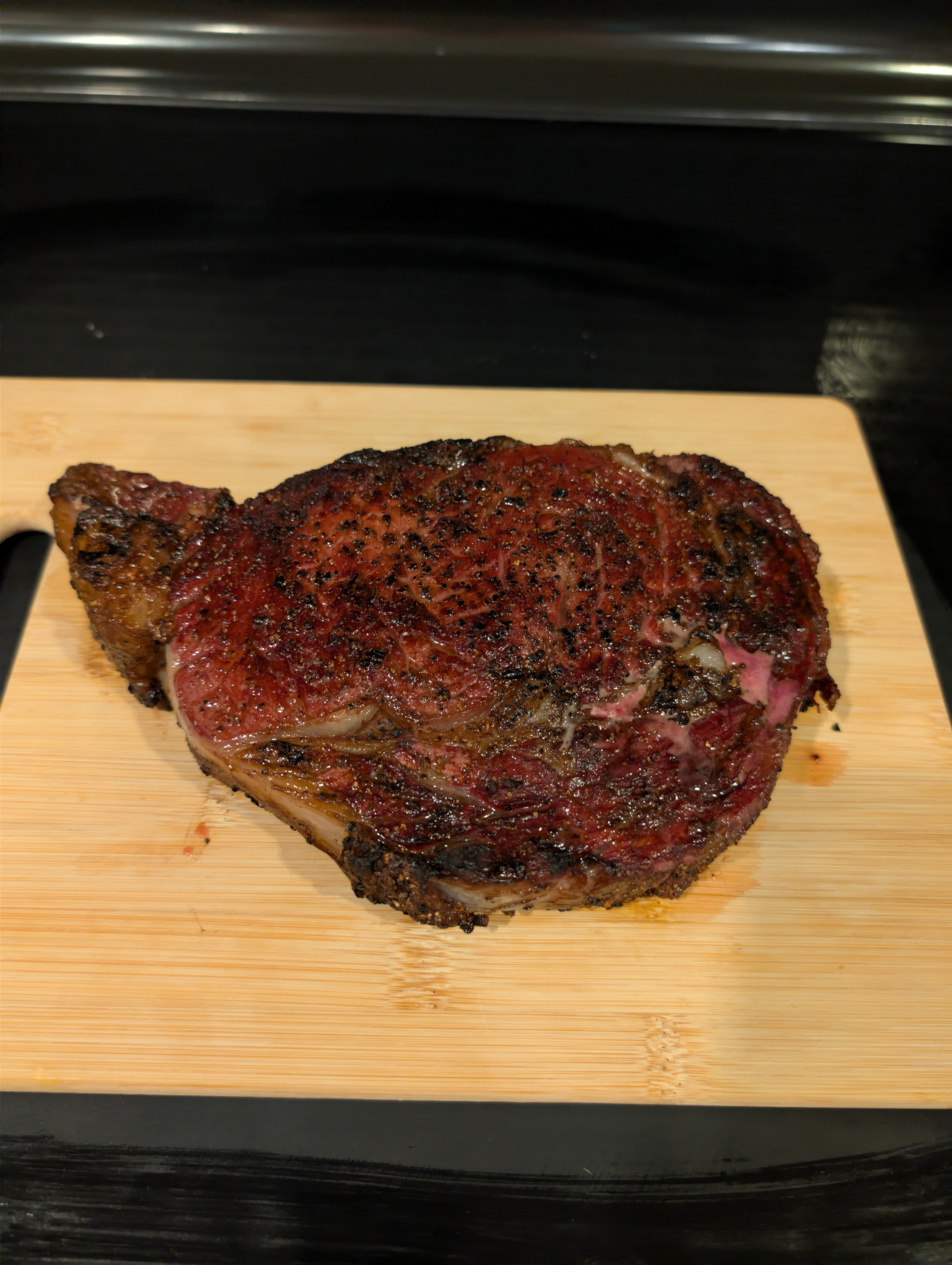
Why the Reverse Sear Works
The traditional method is sear first, finish in the oven. The problem: you're working backwards. A hot pan on a cold steak pushes the heat unevenly through the meat, and you end up with a thick band of gray overcooked meat under the crust before the center comes up to temp.
Reversing it fixes this. When you smoke low first, the entire steak comes up to temperature gently and evenly. By the time you throw it on the Blackstone, the whole steak is already close to done. The sear is purely about crust and Maillard reaction, not cooking the center. One minute per side is all you need because there is nothing left to cook through.
The Pit Boss and Blackstone pairing makes this cleaner than the oven-and-cast-iron version. The pellet grill adds smoke that an oven obviously cannot. The flat top griddle runs hotter and more consistently than most home cast iron pans, and there is no smoke alarm going off in your kitchen.
Steak Selection: Thickness Is Not Optional
Reverse sear only works on thick steaks. You need at least 1.25 inches, and 1.5 inches is better. A thin ribeye will overcook before the smoke has time to penetrate, and there is no room to land on a precise internal temperature before the sear finishes it.
Bone-in or boneless both work. Bone-in takes slightly longer to come up to temp and provides some insulation near the bone, but the difference is minor. Buy whichever looks better at the counter. The fat cap matters more than the bone: look for good marbling throughout and a thick ribbon of fat along the edge. That fat renders during the smoke and bastes the steak on the Blackstone during the sear.
Pro tip: If you can plan ahead, season the steak and leave it uncovered on a wire rack in the fridge for a few hours or overnight. The surface dries out and the seasoning sets, which means a faster and harder crust on the Blackstone. This single step makes a noticeable difference.
Seasoning
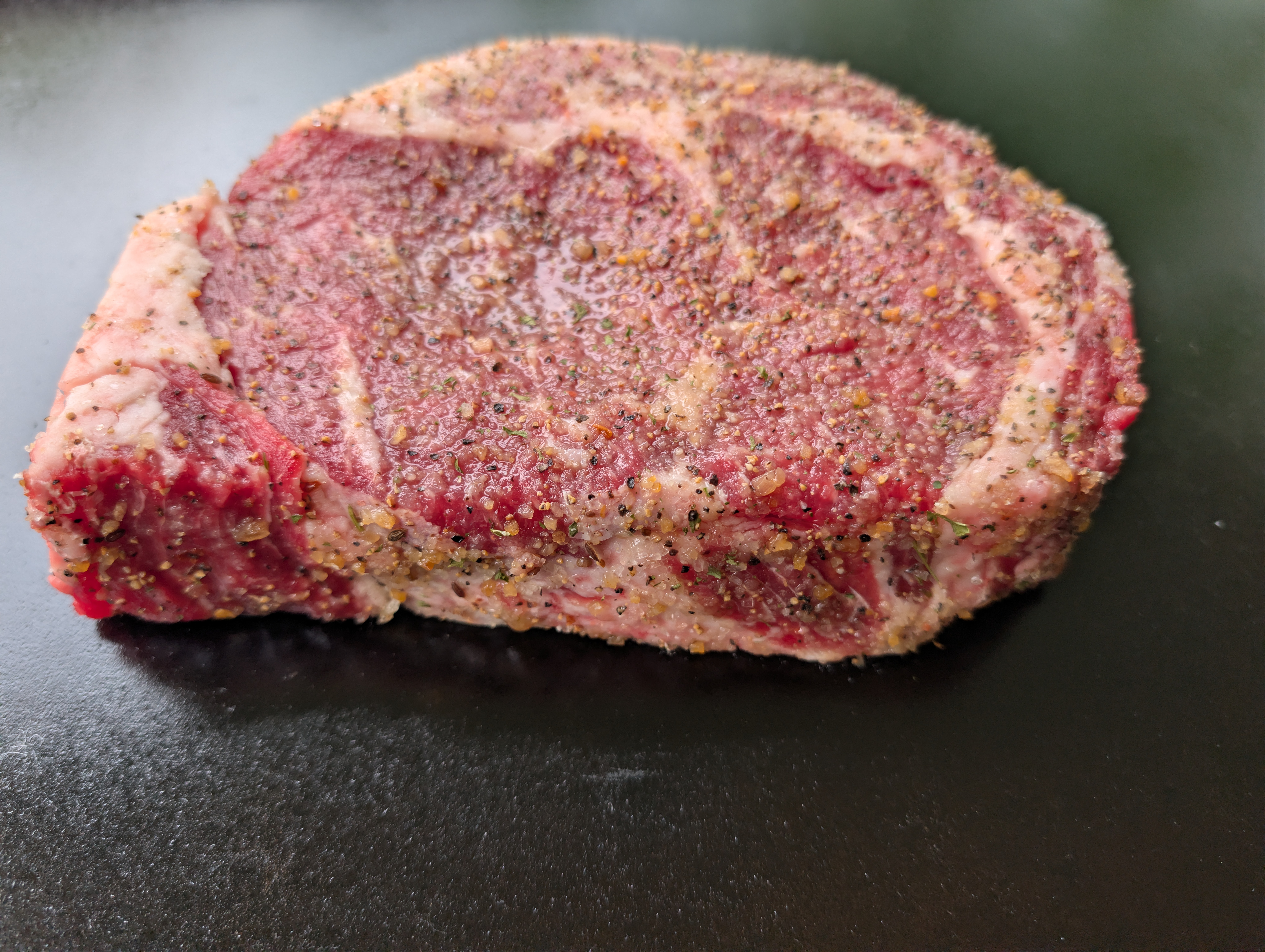
The base is Montreal Steak Seasoning, heavy. The coarse grind stays on the surface and forms a physical crust when it hits the griddle rather than dissolving into the meat. Apply it generously on all sides including the edges. Do not press it in.
On top of that, a light dusting of Lawry's Garlic Salt. Just enough to bring in the garlic without piling on extra salt. The Montreal already has salt in it, so go light with the Lawry's. This is the combo I use on this cook every time.
Pellet Selection for Beef
Oak
Medium · CleanThe classic beef wood. Enough smoke to register without overpowering the ribeye. Start here if you are unsure.
Cherry
Mild · Deep ColorAdds a dark mahogany color to the bark. Mild flavor that pairs well with the Montreal rub. Great if you want presentation to match the taste.
Pecan
Medium · NuttyRich, slightly sweet, works well on fatty cuts. A good second choice if you do not have oak on hand.
Hickory
Bold · Bacon-ForwardStrong on a ribeye over a short smoke window. Use it if you want an aggressive smoke hit, or blend 50/50 with oak to dial it back.
Step-by-Step
Phase 1: The Smoke (225°F, Pull at 120–125°F for Medium Rare)
- Pull the ribeye from the fridge 20 to 30 minutes before it goes on the grill. Not strictly required, but a slightly warmer steak comes up to temp more evenly during the smoke.
- Preheat the Pit Boss to 225°F. Let it stabilize fully, 10 to 15 minutes minimum. If your model has a Smoke Mode or P-setting, use it. You want maximum smoke output at this temperature.
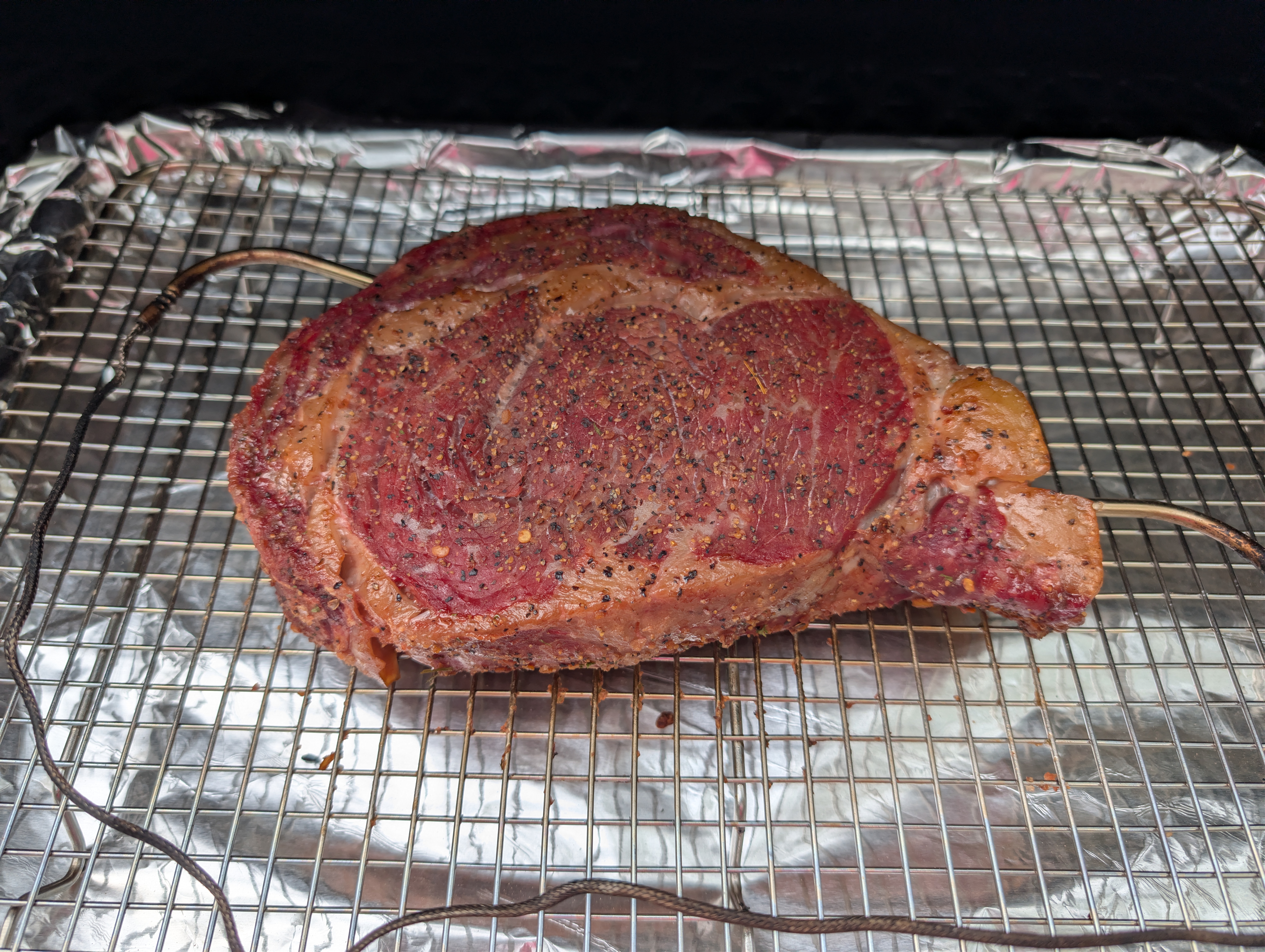
- Set the ribeye on the stainless airflow rack over the foil-lined pan. Wrapping the pan keeps cleanup easy without blocking smoke around the steak. Close the lid and leave it alone.
- Use the built-in probes on the Pit Boss to monitor the internal temp without opening the lid. Set an alarm for 120–125°F for medium rare. For a 1.5-inch ribeye this typically takes 50 to 65 minutes, but the probe is the timer on this cook, not the clock.
- The moment it hits temp, pull it and go straight to the Blackstone. No waiting, no tenting. The griddle should already be ripping hot and ready.
Pro tip: Start preheating the Blackstone on high when the steak hits about 110°F internal. By the time the alarm goes off at 120–125°F, the griddle is already at full heat and you go straight to the sear without any downtime.
Phase 2: The Sear (Blackstone, Ripping Hot, 1 Min Per Side)
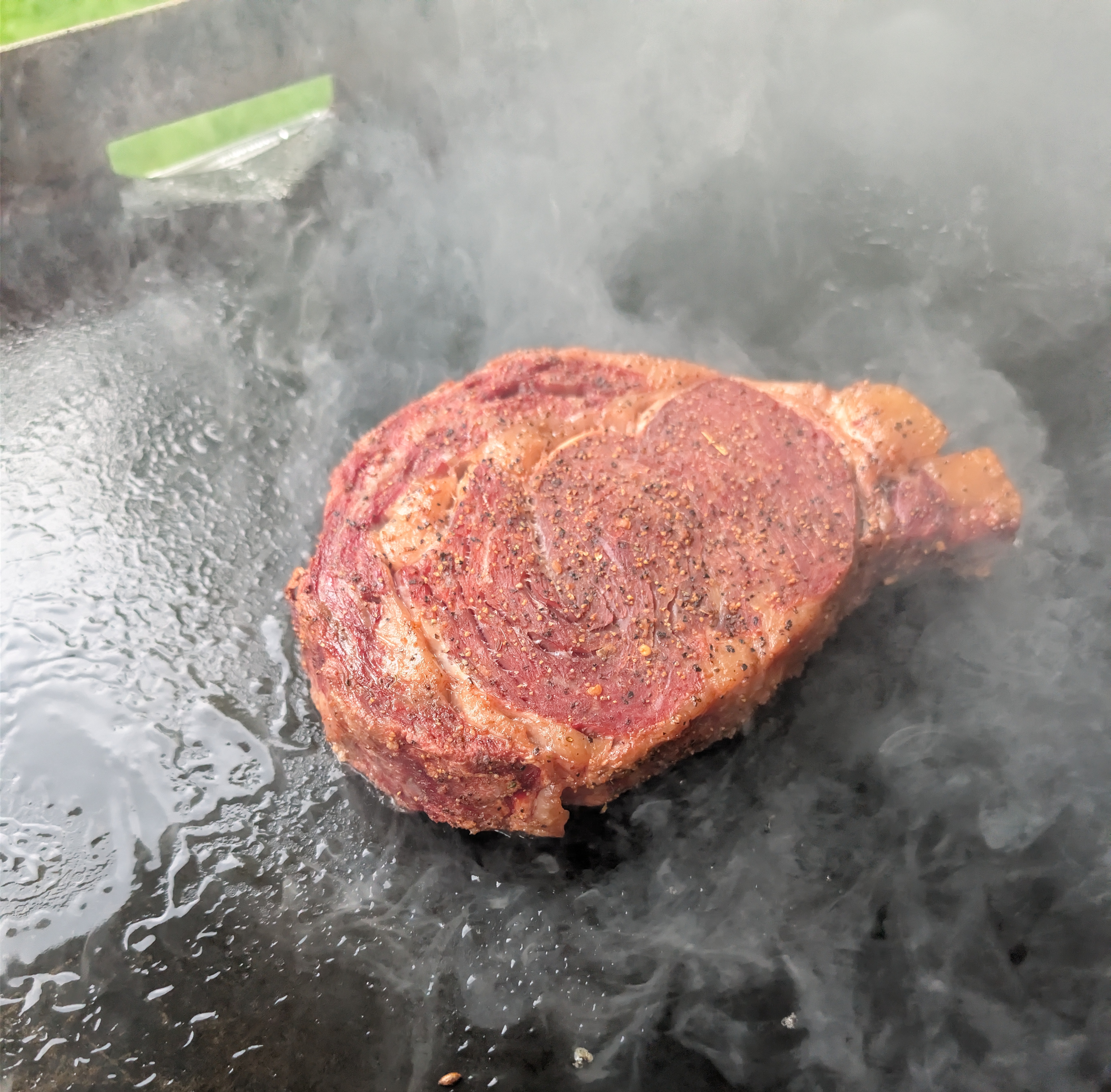
- Preheat the Blackstone on high for at least 10 minutes. The surface should be at 500°F or above. If you have an infrared thermometer, use it. If not, a drop of water should instantly flash-evaporate on contact.
- Add a thin layer of tallow, beef tallow, or a high-smoke-point oil (avocado oil works) right before the steak goes on. Not much. Just enough to coat the surface and help the crust develop evenly.
- Place the ribeye on the griddle. Do not touch it. Sear for exactly 1 minute. You should hear a hard sizzle and see smoke immediately. If you do not, the griddle is not hot enough.
- Flip once. Sear for another 1 minute on the second side. Same rules: do not press, do not move it.
- Stand the steak on its fat cap edge and sear the fat for 30 to 45 seconds. This renders the edge fat and gives you crust all the way around.
- Pull it. Do not go longer. The steak was already at 125°F before it hit the griddle. One minute per side will add 5 to 8 degrees of carry-over. It will finish at 130 to 133°F during the rest, which is the center of the medium-rare window.
Rest and Slice
Rest the steak for 5 minutes on a cutting board. Do not skip this. The carry-over heat is still working and the juices need time to redistribute. If you cut into it immediately you will lose them on the board instead of in your mouth.
Slice against the grain and serve. Finishing with a pinch of coarse salt or a pat of compound butter at this stage is optional, but it adds a good hit of richness right before serving.
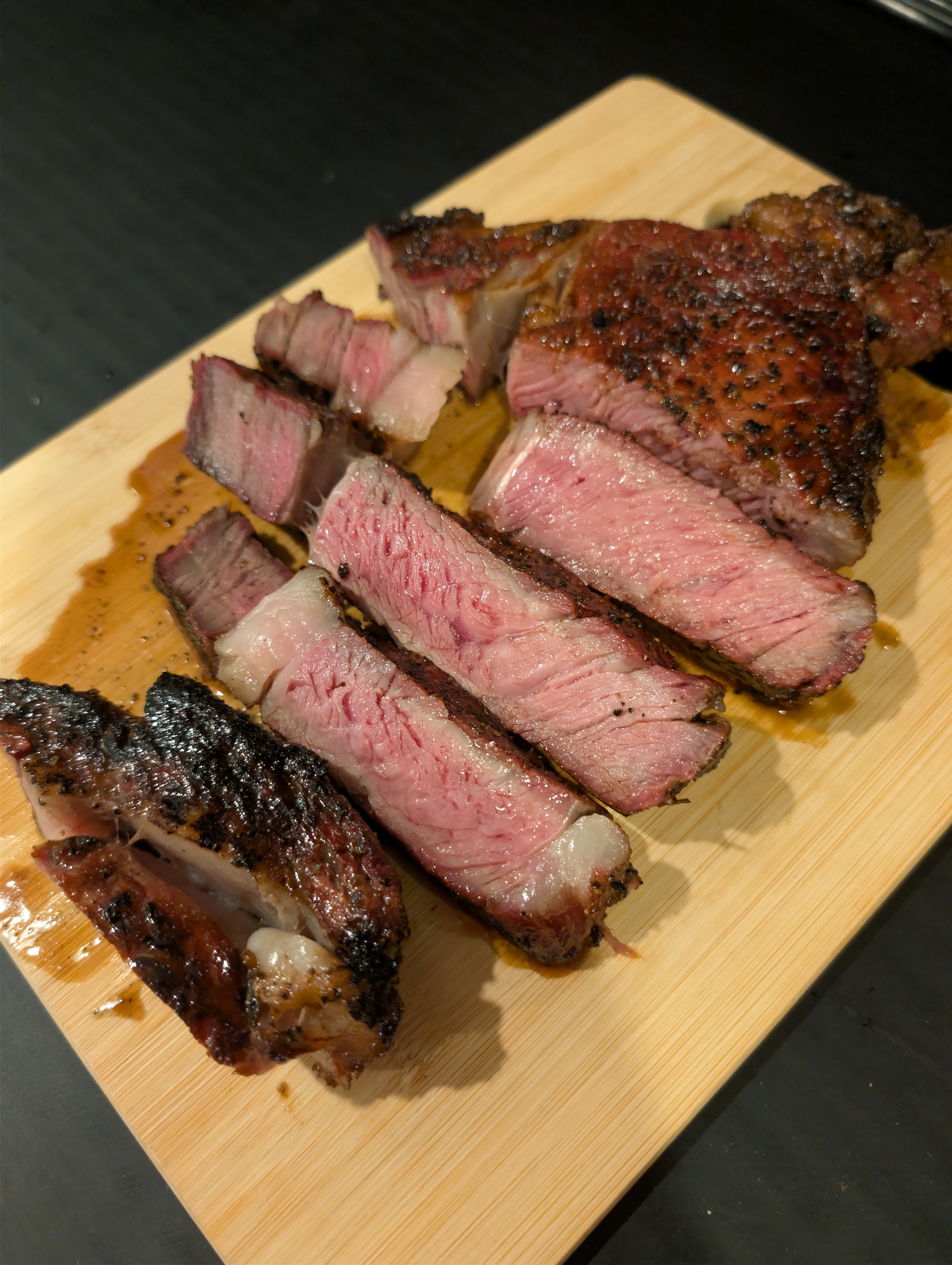
When the Smoke Clears
No Steakhouse Required
This is the best thing I make. Everyone loves it, and I mean everyone, not just Sadie. If you know, you know.
The photos are cooked slightly more than I personally like, but that is what makes Amanda happy, so that is what we do. Happy wife, happy life. Emmirsyn will cancel plans if I text her that we are having steak. That tells you everything you need to know about where this cook ranks in our house.
This is the treat we all deserve on the weekend. I head to a local meat market and ask for a thick cut ribeye, 1.5 to 2 inches. That thickness is what makes the reverse sear work. Do not try to pull this off with a thin grocery store steak.
The two-cooker setup is the whole point. The Pit Boss does what an oven cannot: it adds smoke. The Blackstone does what a cast iron pan indoors cannot: it runs hot enough, consistently enough, to build a real crust without filling your kitchen with smoke. Together they produce something that genuinely competes with a high-end steakhouse, for a fraction of the price.
Gear Used in This Cook
These are the exact tools used for this cook. Affiliate links help keep the site running. Thanks for the support.
McCormick Montreal Steak Seasoning
Coarse grind that stays on the surface and builds a real crust on the Blackstone without burning at high heat. The go-to rub for beef on this site.
Check Price on AmazonUltra Cuisine Aluminum Baking Sheet with Stainless Steel Airflow Rack
Wrap the pan in foil for easy cleanup, set the steak on the airflow rack, and smoke. Gives you airflow all the way around the steak without the mess. The same set I use for every cook. Full review here.
Check Price on AmazonTempPro TP420 Instant-Read Thermometer
The Pit Boss probes handle the smoke phase, but this is handy for a quick double-check on the sear side. The folding probe keeps your hand clear of the hot griddle surface.
Check Price on Amazon